De Stijl
De Stijl is a design aesthetic defined by straight horizontal and vertical lines, squares and rectangles, asymmetry, worked in a palette of primary colors and non-colors. Associated with the 1910s, De Stijl leans toward pure abstraction, spiritual harmony, universality. Related looks include Bauhaus, Constructivism.
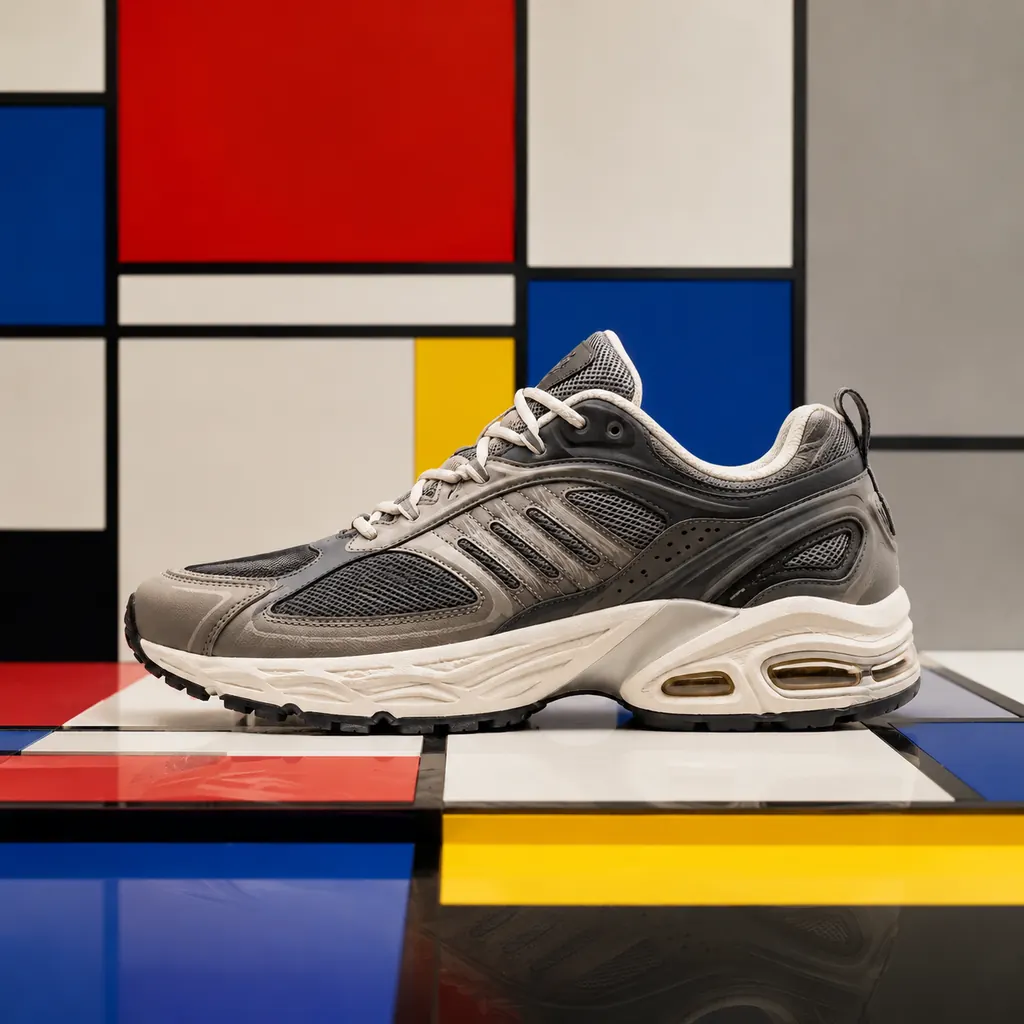
AI image prompt
De Stijl aesthetic — Straight horizontal and vertical lines, squares and rectangles, asymmetry, geometric abstraction. Colour palette: Primary colors and non-colors. Mood: Pure abstraction, spiritual harmony, universality. Highly detailed, rich colour and texture, evocative mood, high quality.
What it is
De Stijl is a design aesthetic built around straight horizontal and vertical lines, squares and rectangles, asymmetry, geometric abstraction. The De Stijl palette works in primary colors and non-colors. As a named look, De Stijl is most associated with the 1910s. Beyond the essentials, the De Stijl look leans on dynamic equilibrium and related details — 5 recurring motifs in all. In feeling, De Stijl reads as pure abstraction, spiritual harmony, universality, order. De Stijl sits within a family of related looks such as Bauhaus, Constructivism, Cubism, Suprematism. Additionally, to recreate De Stijl in an AI image tool using GPT Image or Midjourney, pair primary colors and non-colors and primary colors and non-colors tones with straight horizontal and vertical lines and squares and rectangles, and keep a pure abstraction mood. For example, De Stijl pairs naturally with Bauhaus and Constructivism on a shared mood board.
Palette
Primary colors and non-colors
Motifs
Straight horizontal and vertical lines, squares and rectangles, asymmetry, geometric abstraction, dynamic equilibrium
Mood & values
Pure abstraction, spiritual harmony, universality, order, reduction to essentials, utopian social vision, integration of art and life
Related vibes
More vibes every week
Vibeboard is a free visual reference. Bookmark it, and copy a ready-to-use AI image prompt from any vibe.
Browse all vibes →